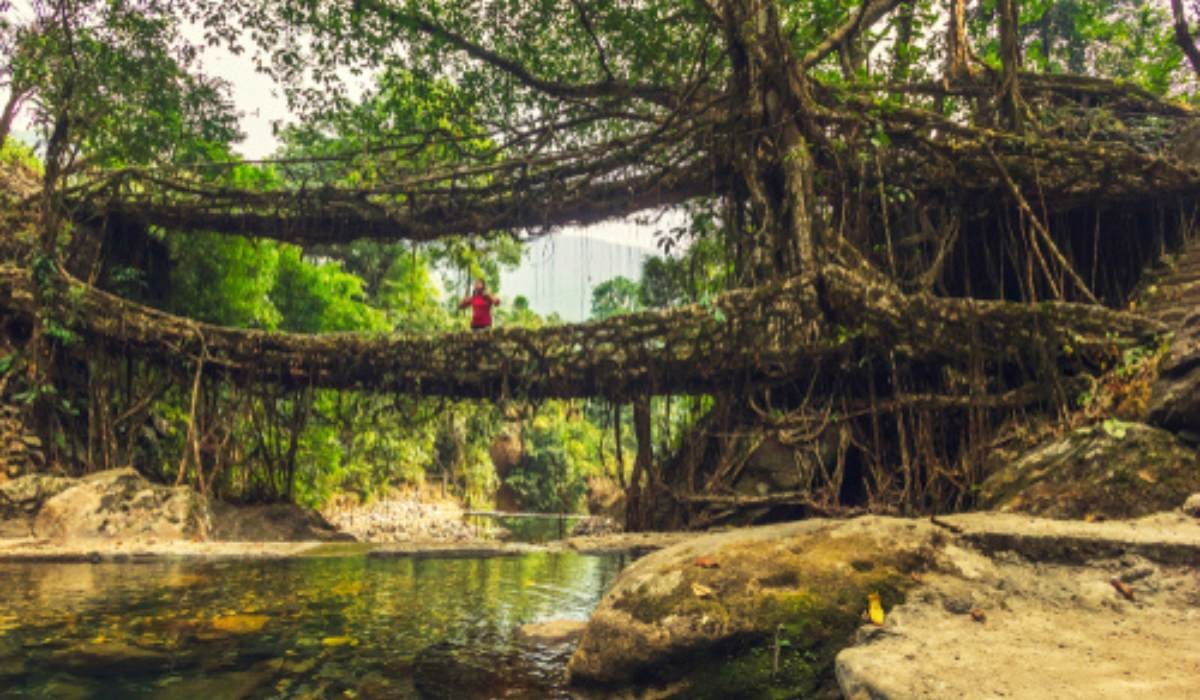
Hidden deep in the rain-drenched forests of Meghalaya, the Living Root Bridges are one of the most fascinating wonders of nature and human skill combined. Crafted by the Khasi and Jaintia tribes, these bridges are not built — they are grown. Over decades, the roots of ancient rubber trees (Ficus elastica) are guided and woven to form strong, living pathways across rivers and streams.
🪴 Where You’ll Find Them
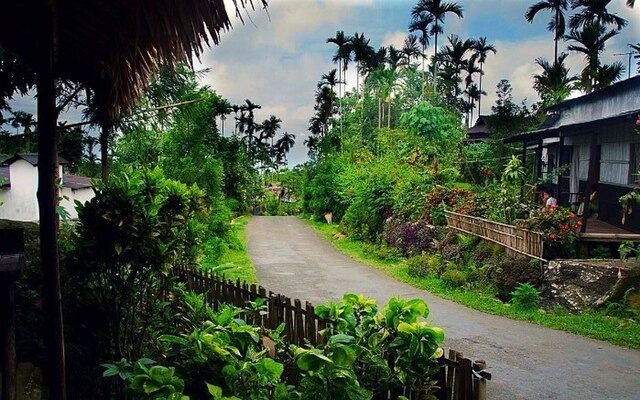
The most famous root bridges are located near Cherrapunji (Sohra) and Mawlynnong.
-
Nongriat Village (Double-Decker Bridge): The most iconic two-level bridge, a must-visit for trekkers.
-
Riwai Village (Near Mawlynnong): Easy to access, great for families and first-time visitors.
-
Nongthymmai & Tyrna Villages: Offbeat locations with fewer tourists and serene forest surroundings.
🏞️ The Trek to Nongriat (Double-Decker Bridge)
The journey begins from Tyrna village, about 12 km from Cherrapunji. You’ll descend 3,500 steps through lush forest trails, bamboo bridges, and waterfalls. It’s a 1½ – 2 hour trek down (and a bit longer coming up), but every step rewards you with breathtaking views.
At the bottom lies the Double-Decker Root Bridge, standing strong for more than 150 years. Local villagers maintain it, and tourists can even swim in the crystal-clear natural pool nearby.
🌿 How the Living Root Bridges Are Made
Local communities use aerial roots of the rubber fig tree. They guide them across bamboo frames or hollow trunks to the other side of a stream. Over 15-25 years, these roots grow thicker and stronger, naturally forming a bridge capable of holding dozens of people at once. Some bridges are over a hundred years old — still alive and growing!
🧭 Best Time to Visit
🛏️ Where to Stay
Homestays are available in Nongriat, Cherrapunji, and Mawlynnong. Staying overnight lets you experience the bridge at sunrise or sunset, when the light makes the roots glow golden through the mist.
⚙️ Trek Tips
-
Carry light luggage and trekking shoes with good grip.
-
Bring snacks and enough water (no shops mid-trail).
-
Respect local culture — don’t damage or carve the roots.
-
Hire a local guide; they know the safest routes and stories behind every bridge.
💚 Why Visit the Living Root Bridges
Because they represent harmony between nature and humans. In a world of concrete, these living structures remind us that sustainability and patience can create beauty that lasts for centuries.

 Travelochat.com
October 8, 2025
Travelochat.com
October 8, 2025